
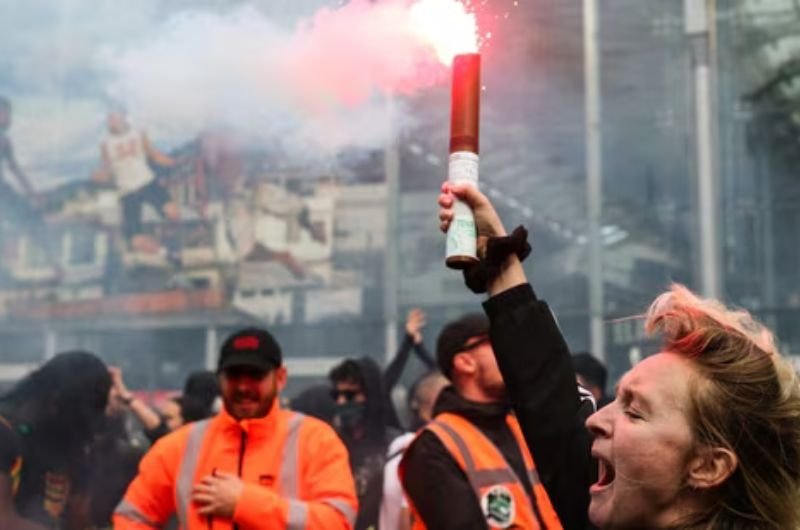
France, long celebrated as a beacon of democracy and protest, is now struggling with an extraordinary political crisis that has left its streets smouldering and its institutions shaken.
On Wednesday, the country swore in its third prime minister in less than a year, as President Emmanuel Macron appointed Sébastien Lecornu to replace François Bayrou, who was ousted in a no-confidence vote backed by both the far right and far left wings.
A fractured parliament
The appointment comes at a time when France is deeply fractured. Parliament is split into three irreconcilable blocs: the right-wing National Rally, the restless left-wing alliance, and Macron’s weakened centrist camp, which survives only through issue-based coalitions.
Lecornu, a former centre-right Republican with ties to far-right leaders including Marine Le Pen, will attempt to steer a government that must deliver a controversial €44 billion budget cut. Supporters see it as a fiscal benefit, while critics fear it will slash salaries and pensions, sparing the wealthy.
Protests without leaders
The political vacuum has spilled into the streets. The grassroots “Bloquons Tout” (“Let’s Block Everything”) movement has mobilised students, workers, and disenchanted citizens into nationwide demonstrations.
These movements have disrupted schools, trains, airlines, and factories. Labour unions are planning for a nationwide strike on September 18.
Echoes of the Yellow Vests
For many, the unrest echoes the “Yellow Vests” revolt of 2018: leaderless, angry, and fuelled by frustration with inequality and a lack of political accountability.
Calls for Macron’s resignation are growing louder as protesters demand reforms that can bridge France’s polarised political landscape.
Without stability and compromise, analysts warn, France risks spiralling further into paralysis at a time when it faces pressing economic and geopolitical challenges.

