
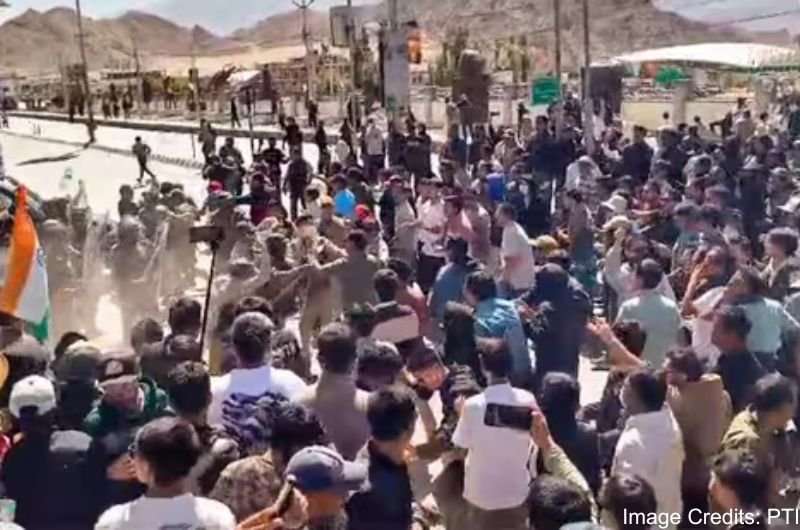
The ongoing protests in Leh, led predominantly by the youth, have taken a serious turn as demonstrators escalated their agitation on Wednesday.
The unrest comes two days after leaders of the Leh Apex Body, the independent organization spearheading the movement, warned that public patience was running thin.
Among the four major demands driving the protests, one significant demand is the inclusion of the region under the Sixth Schedule of the Indian Constitution.
Sixth Schedule of the Indian Constitution:
The Sixth Schedule contains provisions for the administration of tribal areas in the northeastern states of Assam, Meghalaya, Tripura, and Mizoram.
Under Articles 244(2) and 275(1) of the Constitution, the Sixth Schedule empowers the Governor of a state to designate areas as Autonomous Districts or Autonomous Regions, allowing them a greater degree of self-governance and protection of tribal rights and customs.
The Sixth Schedule provides mechanisms for:
- Creation of autonomous districts and regions within a state.
- Legislative powers for local councils on matters such as land, forest, and water resources.
- Administrative autonomy to preserve tribal customs and social practices.
- Financial powers, including the management of funds allocated by the central government for developmental purposes.
Protests continue in Leh:
Protesters in Leh argue that inclusion in the Sixth Schedule would safeguard the cultural, social, and economic interests of the predominantly tribal population of Ladakh.
The demand reflects a desire for greater local autonomy, similar to the protections enjoyed by tribal regions in the Northeast.
Leaders of the Leh Apex Body have reiterated that their movement is not solely about statehood but is aimed at preserving the unique identity and heritage of Ladakh, while ensuring a framework for local governance that empowers indigenous communities.

